

Best Flooring Options for Modern Offices: A Complete Guide to Style and Durability
Have you ever walked into an office and felt like something was just… off? Maybe the room felt echoey and cold, or perhaps the floor looked like it hadn’t been updated since the 1980s. Choosing the right surface for your workspace is a lot like choosing the right pair of shoes for a marathon. If you’re also thinking about optimizing your workspace for remote work, check out our guide on home office design ideas for remote workers for tips on layout and productivity. If you pick something that looks great but hurts your feet, you aren’t going to get very far. In the world of business, your floor is the foundation of your brand’s first impression and your team’s daily comfort.
 Many business owners struggle with “analysis paralysis” when looking at modern office flooring ideas. They want something that looks like a million bucks but costs a fraction of that, survives the “coffee spill test,” and doesn’t sound like a tap-dancing studio every time someone walks to the printer. The wrong choice can lead to expensive repairs, noisy environments that kill productivity, or a space that feels unwelcoming to high-value clients.
The struggle is real because different zones in an office have different needs. Your lobby needs to scream “professionalism,” while your breakroom needs to survive heavy spills, and your main workspace needs to be quiet enough for deep focus. If you are feeling overwhelmed by the sheer number of office flooring types available today, don’t worry. We are going to break down the heavy hitters so you can make a choice that sticks (literally).
Modern Office Flooring Ideas: The Versatility of Luxury Vinyl Tile (LVT)
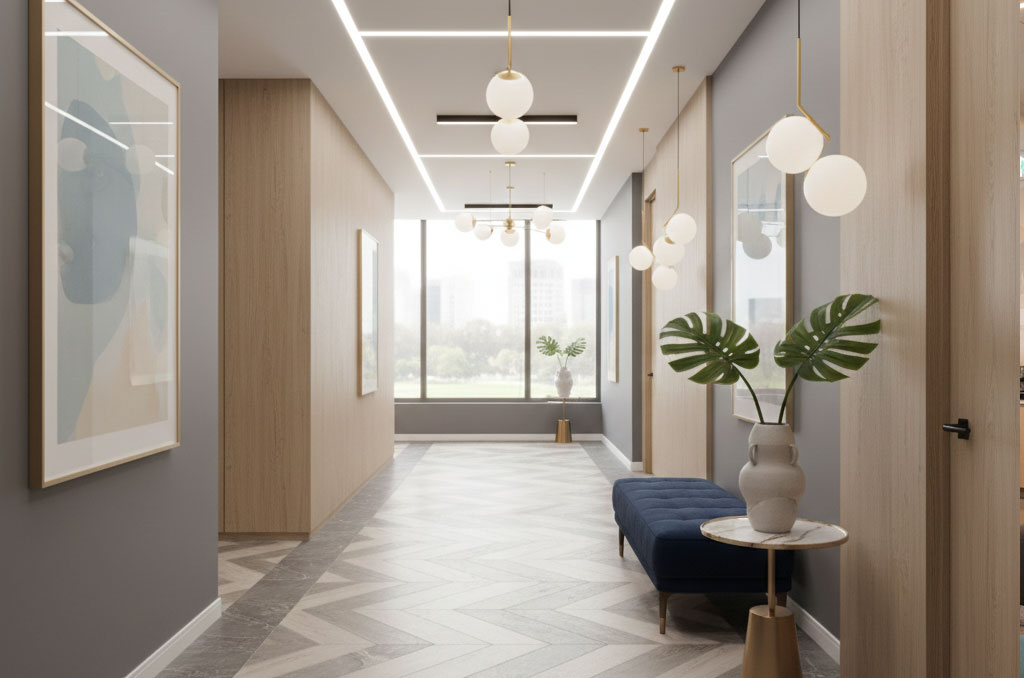 When we talk about the best office flooring options, Luxury Vinyl Tile—or LVT—is usually the first name on the list. Think of LVT as the “chameleon” of the flooring world. It can look exactly like expensive hardwood, polished stone, or industrial concrete, but it’s actually made of durable, high-tech layers of vinyl. It’s a favorite for modern office flooring because it gives you that high-end look without the high-end price tag or the high-maintenance headache.
One of the biggest reasons vinyl flooring for office spaces has exploded in popularity is its “life-proof” nature. In a busy workspace, someone is always dropping a pen, dragging a chair, or tracking in mud from a rainy commute. LVT is designed with a thick wear layer that acts like a suit of armor against scratches and scuffs. Unlike real wood, which might warp if a water cooler leaks, vinyl is water-resistant. This means you can use the same consistent design from your reception area all the way into the employee kitchen without worrying about moisture damage.
From a design perspective, LVT offers endless office floor design ideas. You can arrange tiles in a herringbone pattern to create a sense of movement or use different colors to “zone” your office without building walls. For example, you might use a warm oak-look vinyl in the lounge area to make it feel cozy, and a sleek grey stone-look vinyl in the conference room to keep things serious and focused. It’s easy to clean, easy to install, and even easier on the eyes, making it a gold-standard choice for any growing business.
Why Carpet Tiles are the King of Commercial Office Flooring
If you’ve ever worked in a room with hard floors and high ceilings, you know how distracting it is to hear every whispered conversation or clicking keyboard. This is where carpet tiles come in as one of the best flooring options for modern offices. Unlike the giant rolls of “broadloom” carpet your grandma might have had, these are individual squares that fit together like a puzzle. They are the ultimate solution for sound absorption, acting like a giant sponge that soaks up the “white noise” of a busy workday.
The “magic” of carpet tiles lies in their maintenance. Imagine a client walks in and accidentally tips over a full cup of black coffee. With traditional carpet, you’d have to hire a professional cleaner or replace the whole room’s flooring. With carpet tiles, you simply pop out the one stained square, wash it in the sink, or replace it with a fresh tile from your storage closet. It’s like having an “undo” button for your floor. This makes it an incredibly low maintenance office flooring option for high-traffic areas where accidents are bound to happen.
Design-wise, modern carpet tiles are a far cry from the boring grey squares of the past. You can mix and match patterns to create “paths” through the office or use bright brand colors to add a pop of energy to a creative department. They are soft underfoot, which reduces leg fatigue for employees who stand a lot, and they provide a layer of insulation that can actually help lower your heating bills in the winter. For a workspace that feels warm, quiet, and professional, it’s hard to beat this commercial staple.
Polished Concrete and Laminate: Durable Office Flooring for High-Traffic Zones
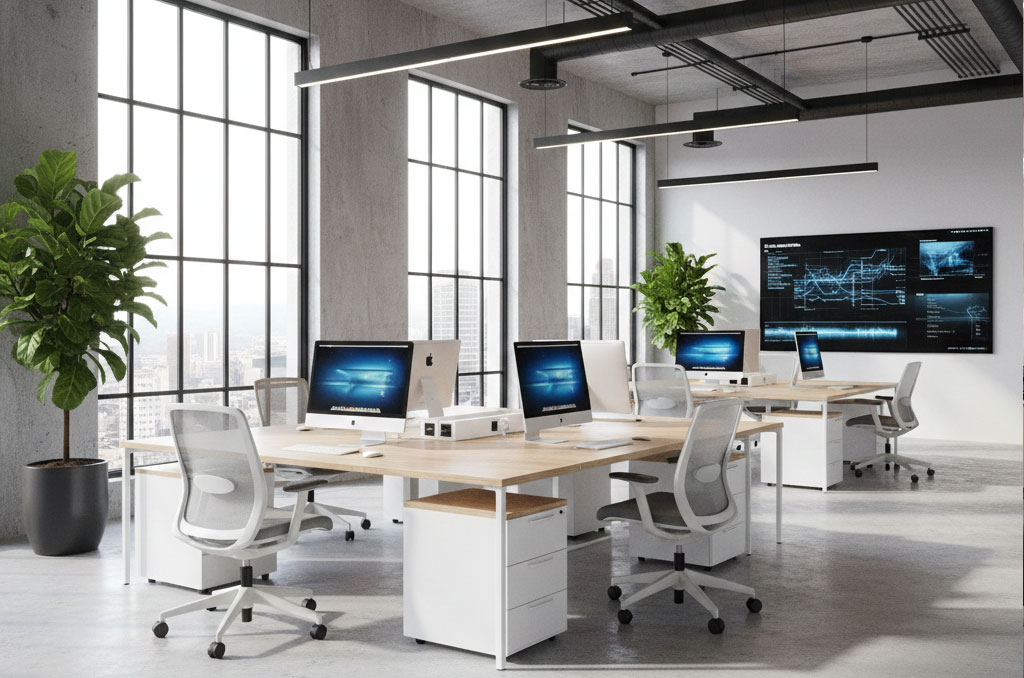 For those aiming for an “industrial chic” or tech-startup vibe, polished concrete is a heavy contender. It’s essentially taking the structural floor of the building and grinding it down until it shines like marble. This is the definition of durable office flooring. You could practically drive a forklift over it and it wouldn’t flinch. It reflects light beautifully, which can make a small, dim office feel much larger and brighter than it actually is.
However, concrete can be “loud” and “hard,” so many businesses are turning to high-quality laminate as a friendlier alternative. Laminate is like the middle ground between vinyl and real wood. It’s made of pressurized wood fiber and topped with a high-definition image of timber. It’s an excellent choice for home office flooring ideas because it’s DIY-friendly and very resistant to the rolling wheels of office chairs. While concrete is permanent and bold, laminate offers a bit more “give” and warmth, making the 9-to-5 grind feel a little less clinical.
When considering these office flooring types, think about your climate and your “vibe.” Concrete is great for hot climates because it stays cool, but it might feel like an ice skating rink in a snowy city. Laminate, on the other hand, stays a consistent temperature and is much easier to replace if you decide to change your office interior flooring style five years down the line. Both options are great for those who hate the idea of vacuuming every day, as a simple microfiber mop is usually all you need to keep them looking brand new.
Finding the Perfect Balance for Your Space
So, what is the “best” choice? The truth is, the most successful modern office designs often use a “hybrid” approach. You don’t have to pick just one! You might choose polished concrete for the entryway to show off strength, luxury vinyl for the hallways to ensure durability, and carpet tiles for the individual desks to keep the noise levels down. By mixing these office flooring ideas, you create a space that is functional, beautiful, and tailored to the specific tasks happening in each room.
Investing in high-quality commercial office flooring is an investment in your people. To make sure you avoid costly pitfalls, check out our post on office interior design mistakes to avoid for practical tips on creating a productive workspace. When employees are in a space that feels intentional and comfortable, their mood and productivity naturally rise. Plus, you’ll save thousands of dollars over the long run by choosing materials that don’t need to be replaced every two years. Understanding the cost side of office renovations is easier when you follow a clear budgeting process, like our guide on the step-by-step process of construction estimating services. Whether you are looking for vinyl flooring for office use or a sleek stone finish, the key is to prioritize a “commercial grade” rating to ensure it can handle the heavy foot traffic of a successful business.
 Ready to Transform Your Workspace?
Choosing between all the different office flooring types doesn’t have to be a headache. Whether you are leaning toward the acoustic benefits of carpet tiles or the sleek look of modern office flooring like LVT, the best time to upgrade is now. A fresh floor can breathe new life into your brand and give your team the professional environment they deserve.
Don’t let your office’s foundation be an afterthought. Start by measuring your space and considering the “noise factor” of your daily operations. If you found this guide helpful, share it with your office manager or business partner to start the conversation! Your dream office is just one floor away—let’s get stepping toward a better workspace today.